
Huwag haluan ng pulitika: Yamsuan backs DILG’S appeal for unity, zero politicking in solving flooding woes
Advertisers
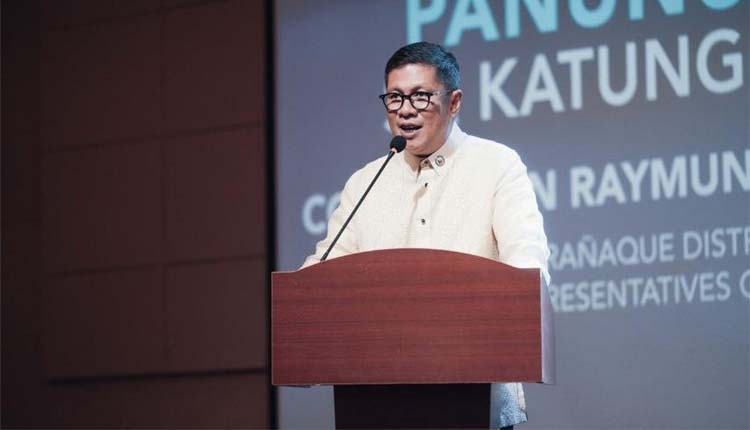
Parañaque 2nd District Representative Brian Yamsuan has expressed his support for the call of the Department of the Interior and Local Government (DILG) to unite across all levels of government and shun politicking in the implementation of flood mitigation projects.
Yamsuan also stressed that local infrastructure projects should be designed to seamlessly integrate into the government’s long-term comprehensive flood management program.
“Tulad ng sinabi ni Secretary Jonvic, dapat ay magkaisa tayong lahat sa gobyerno para masolusyunan na once and for all ang matagal na nating tinitiis na problema sa pagbaha (Like what Secretary Jonvic said, we in government should all unite to resolve once and for all the flooding problem that we have long been suffering from). We also support the Secretary’s call for zero politicking in implementing flood mitigation projects to ensure that public funds are well-spent and projects meet rigid standards,” said Yamsuan.
Yamsuan, whose congressional district covers several of Parañaque’s flood-prone communities, has called for science-based solutions to resolve the country’s perennial flooding problem.
The Parañaque lawmaker is set to meet this week with representatives from the Philippine Space Agency (PhilSA) to determine whether additional funding support is needed to improve the government’s satellite technology and artificial intelligence capabilities in monitoring and assessing disaster-prone areas.
Yamsuan is a member of the House of Representatives’ Budget Amendments and Review Subcommittee (BARSc), which will sit down after committee-level budget briefings for government agencies are done to consider institutional amendments to the proposed national budget for fiscal year 2027.
“Hindi lang Parañaque ang concern natin dito kundi ang buong bansa (Our concern is not only Parañaque but the entire country). With climate change threatening to bring more devastating typhoons and destructive Habagat-induced rains and flooding, we need technologies that provide actionable information and guidance on how we can effectively lessen the impact of climate change down to the local government level,” said Yamsuan, a former assistant secretary of the DILG.
The PhilSA uses satellite data to, among others, determine flood impact and generate flood extent maps to prioritize areas for response and assistance. The agency also offers training to local government units (LGUs) on the use of geospatial and satellite data in local disaster risk reduction and management planning.
In echoing Remulla’s call for unity to solve the country’s severe flooding woes, Yamsuan stressed that local flood mitigation projects should align with the national flood management masterplan.
“Local flood mitigation projects should seamlessly integrate into the national government’s long-term flood management plan so as not to waste public funds and also to make sure that solutions implemented in one area do not create new problems in another,” Yamsuan said.
He cited as an example, the Japan-funded Manggahan Control Gate Structure in Marikina City, which, once completed, could divert massive amounts of floodwaters into Laguna De Bay and worsen flooding in Parañaque and other surrounding areas.
To prevent this from happening, the Marcos administration gave the go-signal for the implementation of the long-delayed Parañaque Spillway Project, an engineering intervention designed to drain excess water from Laguna de Bay into Manila Bay to protect flood-prone communities in southern Metro Manila.
The Department of Public Works and Highways (DPWH) earlier said that a new design for the Parañaque Spillway has been completed to address concerns raised by the LGUs of Muntinlupa over the possible displacement of families, and of Bacoor in Cavite, over the possible shifting of the flooding problem to the city. ###