
Speaker Dy pushes bamboo as national economic driver, livelihood source for farmers
Advertisers
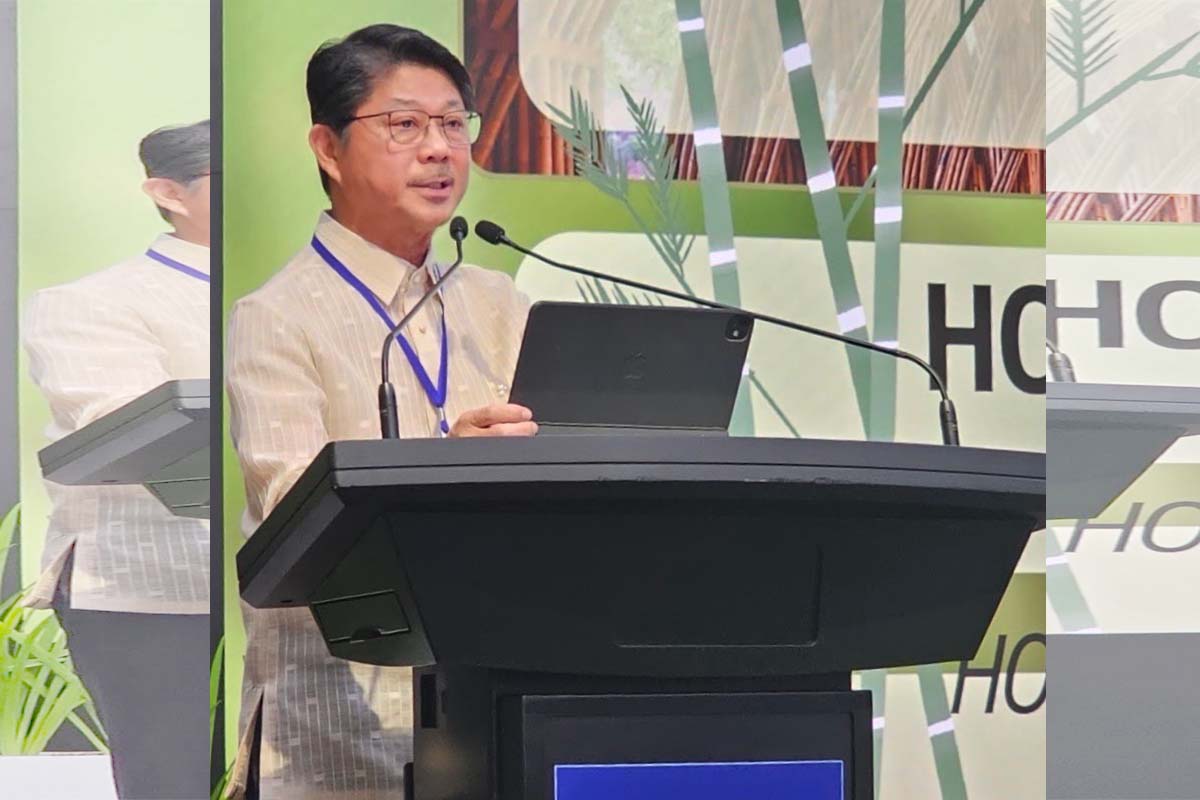
Speaker Faustino “Bojie” G. Dy III on Thursday called for stronger government and private-sector support to build a competitive Philippine bamboo industry that can generate lasting livelihoods for farmers, create jobs in rural communities, and supply locally made products for construction and other industries.
Speaking at the “Building the Future with Bamboo” program at the Asian Development Bank (ADB) headquarters in Mandaluyong City, Dy said his advocacy for bamboo began years ago in Isabela, where he encouraged communities to plant bamboo along the Cagayan River for slope and watershed protection.
“Years ago, when I was the governor, I encouraged the people of Isabela to plant bamboo along the Cagayan river for slope protection and for our watersheds. And when I met former Agriculture Secretary Cito Lorenzo, he helped me see how bamboo could create jobs and provide a lasting source of income for our communities,” Dy said.
The Speaker said the potential of bamboo goes beyond its environmental benefits, stressing that a viable bamboo industry can provide additional sources of income for farmers while supporting businesses and manufacturing in the countryside.
“That belief remains today: to make bamboo a strong and sustainable source of livelihood and an economic driver not only for our province, but for the entire nation,” he said.
“Our hope is that bamboo grown in Isabela will become furniture for our schools, panels for our buildings, and products sold here and abroad. Each product would help Filipino farmers, workers, and their families earn a better living. That is the future we can build together.”
Dy said realizing this potential would require developing the entire value chain—from planting and processing to manufacturing, construction and marketing.
“We do realize that planting is only the beginning. A farmer needs to know where to sell the harvest. A processor needs a reliable supply. A manufacturer needs equipment, skilled workers, and customers. A builder needs confidence in the quality and safety of the material. We have to connect these needs so that everyone has a fair chance to succeed,” he said.
The Speaker said the House of Representatives is advancing several measures aimed at helping connect these different parts of the bamboo industry.
He noted that the House Committee on Agriculture and Food chaired by Quezon Rep. Wilfrido Mark Enverga on Tuesday approved a substitute bill seeking to strengthen Republic Act No. 7900, or the High-Value Crops Development Act of 1995.
The measure, which consolidates House Bill (HB) No. 11189 authored by Cagayan de Oro City Rep. Rufus Rodriguez and HB 11486 authored by Bukidnon 1st District Rep. Jose Manuel Alba, would recognize bamboo as both a high-value and industrial crop and institutionalize the National High-Value Crops Development and Bioeconomy Program.
It also provides for a bamboo development component covering the farm-to-industry ecosystem.
“This measure would recognize bamboo as both a high-value and an industrial crop,” Dy said.
“It would also establish a national program to help develop high-value crop industries, with a bamboo component connecting farms to businesses and markets. This vision is shared by no other than our beloved President, Ferdinand Marcos, Jr.”
Dy also cited HB 10312, or the proposed Bamboo for a Sustainable and Climate-Resilient Built Environment Act, which would support research, standards and training needed for the wider and safer use of bamboo in construction.
He also pointed to HB 8360, or the proposed Bamboo Products Procurement Act, which would require government to devote at least 25 percent of its furniture and fixtures budgets to certified engineered bamboo and other bamboo-based products.
The House is also advancing the proposed Philippine Bamboo Industry Development Act, which includes HB 3540 and seeks to strengthen the industry council, support research, and encourage bamboo plantations.
“These measures reflect our full support for the Philippine bamboo industry. We work to make our laws help turn its potential into investments, jobs, and better incomes,” Dy said.
The event, organized jointly by the Philippine Bamboo Industry Development Council, ADB and BASE Bahay Foundation, formed part of the week-long “Building the Future with Bamboo: Connecting Industry, Innovation, Standards, and Construction” program in celebration of Philippine Bamboo Month.
It also featured the launch of the Manual for the Design of Bamboo Structures to ISO 22156:2021 and a bamboo exhibition.
Joining Dy were Alba, Leyte 3rd District Rep. Anna Victoria Veloso-Tuazon, Bataan 1st District Rep. Antonino Roman III, Bataan 2nd District Rep. Albert Raymond Garcia, Bataan 3rd District Rep. Maria Angela Garcia, Antipolo 2nd District Rep. Philip Conrad Acop, Cavite 8th District Rep. Aniela Bianca Tolentino, and other members of the House.
Also present were Trade and Industry Secretary Cristina Aldeguer-Roque, chair of the Philippine Bamboo Industry Development Council; DTI Undersecretary Blesila Lantayona; Agriculture Undersecretary Cheryl Marie Natividad-Caballero; ADB Vice-President for Sectors and Themes Wempi Saputra; ADB Philippines Country Director Andrew Jeffries; BASE Bahay Foundation officials; representatives of other government agencies; and government officials from Indonesia and Nepal.
Dy thanked those behind the new bamboo structural design manual, saying it would give engineers and builders greater confidence in using bamboo.
The Speaker urged farmers, processors, researchers, engineers, architects, manufacturers, builders, investors and government agencies to work together to transform the industry’s potential into concrete investments and livelihood opportunities.
“My dream began with planting bamboo in Isabela. Today, I hope we can help that dream grow across the country. Let us build a Philippine bamboo industry that our farmers can depend on, our workers can thrive in, and our country can be proud of.”