
Dy-led House passes anti-political dynasty bill on final reading in landmark democratic reform
Advertisers
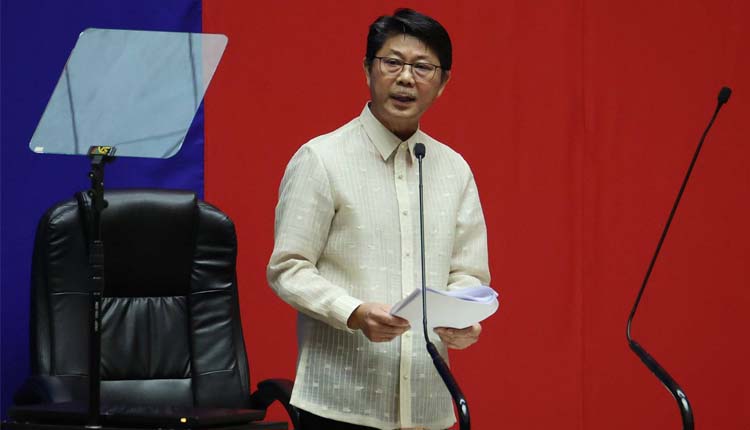
The House of Representatives on Wednesday approved on third and final reading a landmark measure prohibiting political dynasties, a move that Speaker Faustino “Bojie” G. Dy III said fulfills a long-unfinished constitutional mandate and opens the door to a more competitive and inclusive democracy.
Voting 267-20, with seven abstentions, lawmakers passed House Bill No. 8389, or the proposed Anti-Political Dynasty Act, a measure designed to curb the concentration of political power among a few families and expand opportunities for more Filipinos to seek public office.
The bill was principally authored by Speaker Dy and House Majority Leader Ferdinand Alexander “Sandro” A. Marcos, with 173 other lawmakers signing on as co-authors. It is also among the priority measures identified by the Legislative-Executive Development Advisory Council (LEDAC) and endorsed by President Ferdinand R. Marcos Jr.
Dy said the House approval represented a major democratic reform and the fulfillment of a constitutional obligation that Congress had left unanswered since the ratification of the 1987 Constitution.
“Sa loob ng halos apat na dekada, naghihintay ang ating Saligang Batas na maisakatuparan ang pagbabawal sa political dynasties. Ngayon, kumilos ang Kamara. Isang mahalagang yugto ito sa ating demokrasya sapagkat ang isang pangakong konstitusyonal ay nagsisimula nang maging isang konkretong reporma,” ani Dy.
“This measure does not intend to target families or restrict legitimate political participation. It seeks to ensure that public office remains open to all Filipinos and that leadership is determined by the people’s trust, not by the concentration of power in a few clans.”
Article II, Section 26 of the Constitution directs the State to prohibit political dynasties as may be defined by law.
Dy said the bill seeks to strengthen democratic competition and encourage the emergence of new leaders across the country.
The Speaker from Isabela said that “a stronger democracy is one where every Filipino, regardless of surname or political pedigree, has a fair chance to serve. By opening more space for new voices, new leaders and new ideas, we strengthen our institutions and deepen public trust in government.”
The measure was approved following extensive deliberations by the House Committee on Suffrage and Electoral Reforms chaired by Lanao del Sur 1st District Rep. Zia Alonto Adiong, which consolidated 17 related proposals into a substitute bill after consultations with stakeholders from Luzon, Visayas and Mindanao.
During committee hearings and plenary debates, lawmakers examined the constitutional basis of the proposal, its impact on local political structures, enforcement mechanisms available to the Commission on Elections (Comelec), and safeguards protecting the right to seek public office.
The substitute bill adopted a second-degree limitation after lawmakers weighed concerns over constitutionality, enforceability and administrative practicality. Under the bill, a political dynasty is defined as the concentration, consolidation or dominance of elective political power by spouses or relatives within the second degree of consanguinity or affinity.
The measure prohibits such relatives from simultaneously running for or holding elective positions in the same national, provincial, city, municipal or barangay government, or from seeking seats in the House of Representatives within the same legislative district.
Candidates for elective office will be required to submit sworn declarations to the Comelec certifying that their candidacies will not result in a prohibited dynastic relationship. Where conflicting candidacies arise, the measure provides mechanisms for voluntary withdrawal and, if necessary, the drawing of lots if the parties fail to agree on who may assume office.
The bill likewise directs the Comelec to issue implementing rules and regulations within 90 days from the law’s effectivity.
Dy said the House had taken an important step toward fulfilling one of the unfinished promises of the Constitution.
“This vote is bigger than any political party, family or administration. It is about giving future generations a more open and competitive democracy where public service is accessible to all who are willing and qualified to serve,” said the House chief.
“The House has done its part. We hope this reform continues to move forward so that a constitutional promise made nearly 40 years ago can finally become a reality for the Filipino people.” (RM)