
Surmounting barriers to justice: Yamsuan eyes barangay aid desks, mobile units for free legal aid
Advertisers
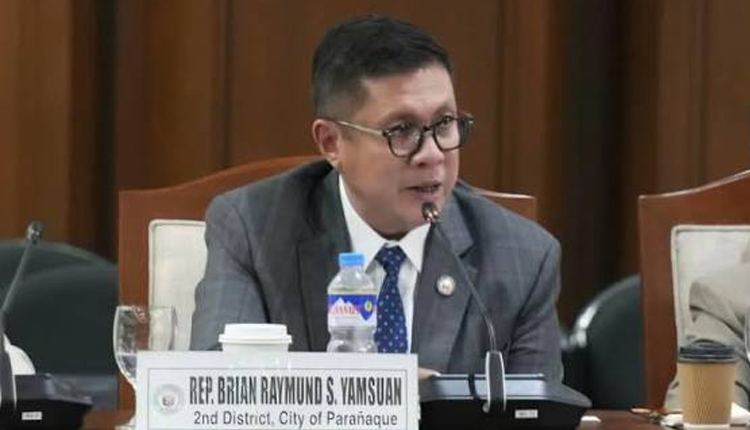
Parañaque 2nd District Representative Brian Yamsuan has proposed the establishment of barangay assistance desks and mobile legal clinics across the country to ensure that free legal aid reaches underserved and far-flung communities.
Providing easy access to legal aid in underserved areas would not only bridge the justice gap between privileged and marginalized sectors but would also help Filipinos understand and assert their legal rights, Yamsuan said.
He has filed House Bill (HB) 9476 which aims to institutionalize mobile legal clinics (MLCs) and barangay legal aid desks (BLADs).
“Karapatan ng bawat Pilipino ang magkaroon ng libreng access sa sapat na serbisyong legal. Pero marami sa ating mga kababayan, lalo na ang mga nasa malalayong lugar, ang hindi nabibigyan ng ganitong serbisyo dahil mahirap puntahan ang mga korte o abugado, o kaya ay malaki ang kinakain nito hindi lamang ng kanilang oras kundi maging ng kanilang kakarampot na kita. Our proposed measure seeks to overcome these barriers to justice and deliver legal aid to the grassroots,” Yamsuan said.
(Every Filipino has the right to free access to adequate legal services. However, many of our countrymen, especially those in remote areas, are not given this kind of service because it is difficult to go to the courts or a lawyer, or that it eats up not only a lot of their time but also their meager income.)
According to the latest available data from the World Justice Project, eight out of 10 Filipinos lack access to legal aid. Those most vulnerable to this inadequacy were overseas Filipino workers (OFWs), persons with disabilities (PWDs), small and medium enterprise owners and indigent clients.
Through HB 9476, MLCs will be established and operated by the Department of Justice (DOJ) and the Public Attorney’s Office (PAO), bringing free legal aid “on wheels” directly to far-flung communities. These legal clinics shall be manned by PAO lawyers, paralegals, accredited volunteer lawyers, law student interns and legal aid volunteers.
The bill also provides for the creation of BLADs in every barangay, which shall be staffed by trained paralegals, volunteer lawyers and legal interns to strengthen and support the MLCs’ initiatives.
Both the BLADs and MLCs are tasked with providing legal consultation and advice, mediation and conciliation services, and assistance in preparing legal documents such as affidavits, contracts and simple pleadings. The MLCs shall have the additional tasks of providing assistance in labor disputes, land conflicts, family law cases, consumer protection, and notarization of documents; and conducting public education sessions.
“In many cases, people do not immediately need a courtroom battle to assert their right, they simply need guidance and a fair opportunity to be heard,” Yamsuan said.
“By placing capable legal volunteers within communities, this bill will enable residents to receive immediate assistance without the burden of engaging a private counsel or spending time and money travelling to city centers or the courts for free legal assistance,” he added.
To encourage participation in the MLCs and BLADs, the bill provides for incentives for volunteer lawyers and law students, such as Mandatory Continuing Legal Education (MCLE) credits, tax deductions for pro bono legal services, and law internship credits for students in state-run law schools.
On top of expanding access to legal aid, Yamsuan said HB 9476 also mandates the MLCs and BLADs to promote the amicable settlement of disputes through mediation, conciliation and other alternative dispute resolution mechanisms.
“Strengthening our system of mediation and amicable settlement, which has long been part of the Filipino tradition of resolving conflicts within the community, offers a faster and cheaper way of settling conflicts. It would also help reduce the caseloads in our heavily congested courts,” Yamsuan said.
HB 9476 also provides for the creation of a Barangay Legal Assistance Council (BLAC) to oversee the implementation and monitoring of the measure, recommend improvements in the delivery of legal aid, and submit an annual report to Congress. The BLAC shall be composed of representatives from the DOJ, PAO, Department of the Interior and Local Government (DILG), Integrated Bar of the Philippines (IBP), state-run law schools, and relevant civil society organizations.