
Yamsuan eyes measure penalizing utility firms for abandoning unused, dangling cables
Advertisers
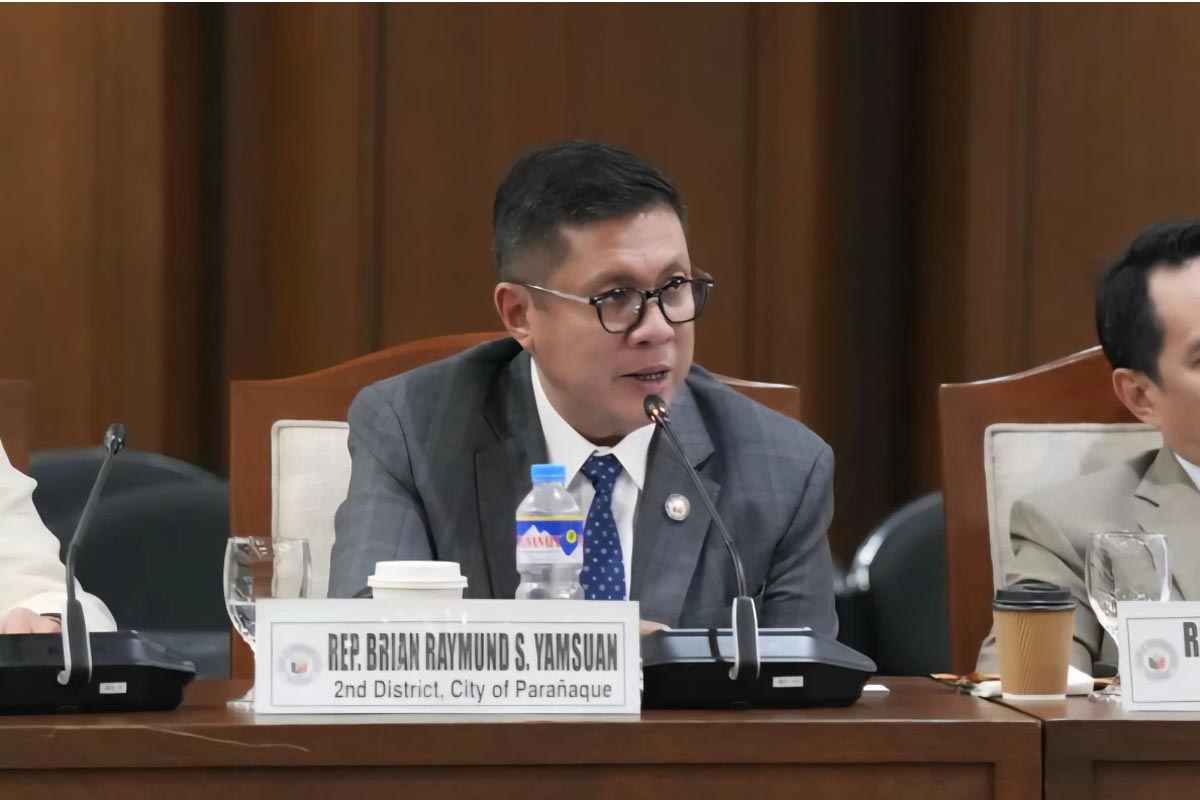
Parañaque 2nd District Representative Brian Yamsuan wants public utility companies penalized with heavy fines and the suspension or revocation of their local government-issued permits if they fail to remove their non-operational wires and cables from electric posts.
Yamsuan said his proposed measure under House Bill (HB) 11461 aims to rid communities of tangled, crisscrossing overhead cables or “spaghetti wires” that are not only unsightly but also pose serious threats to public safety and infrastructure.
“We want utility firms to be held accountable for failing to address this longstanding urban eyesore and hazard. Our measure not only imposes penalties, but also sets clear standards for the installation, identification, and maintenance of utility cables so that we could finally rid our communities of spaghetti wires overloading utility poles,” Yamsuan said.
“The continued accumulation of abandoned, unused cables has created a dangerous and often neglected problem along our public roads and residential areas. These are accidents waiting to happen. “Matagal nang hinahayaan ang ganitong problema kahit puwede namang may solusyon (We have long tolerated this problem even when there is a solution),” he added.
Many of these dangling, jumbled cables are non-operational TV and cable lines while others are internet and telecommunication wires and illegal jumper connections tangled with legal electrical connections.
These dangling wires may cause electrocution, sparks, and devastating structural fires particularly in densely populated communities and high-traffic areas.
Yamsuan has commended the cities of Manila, Taguig, San Juan and other LGUs that have taken the initiative of clearing their communities of spaghetti wires in coordination with utility providers.
“Marami sa mga LGUs natin ang may mga ordinansa at regulasyon na para atasan ang mga utility providers na ayusin ang pag-install at pag-maintain ng kanilang mga linya pero tila hindi ito nasusunod (Many of our LGUs already have ordinances and regulations directing utility providers to properly install and maintain their lines but they apparently are not followed),” Yamsuan said.
“What we need is a strict legal framework that clearly holds public utility entities accountable, which is why we are pushing for the passage of our proposed measure,” Yamsuan said.
Under Section 4 of HB 11461, public utility providers are mandated to properly secure and maintain dangling aerial utility wires; remove non-operational ones; and relocate, repair or replace damaged poles that contribute to unsafe or improperly positioned overhead wires.
Utility providers are also tasked under the bill with ensuring that aerial wires comply with minimum safety clearance standards prescribed by relevant government agencies, and in conducting periodic inspections and maintenance of aerial utility infrastructure within their service areas.
Once the bill becomes law, utility firms are given one year from the effectivity of the measure to comply with these provisions.
A P300,000 fine shall be imposed on any public utility firm that fails to comply within the one-year grace period with the safety provisions set under Section 4.
Failure by any public utility company to remove their non-operational lines o comply with the other safety provisions under Section 4 are penalized under the bill with a fine of not less than P100,000 for each day of non-compliance computed from the time of the filing of a complaint to the proper authority.
If the installation or relocation of wires and cables cause any damage to property or injury to persons, the public utility company is mandated under the bill to shoulder the full costs of the damage and/or medical expenses incurred, and pay a fine of not less than double the amount of such costs.
The local government units (LGUs) are mandated under the bill to monitor and ensure the compliance by utility providers. LGU officials face administrative sanctions if they fail to undertake these tasks.
LGUs may suspend or revoke the permits of any utility firm for any violation of the safety standards.
Last year, the city government of Manila estimated that there were about two million kilos of unutilized and unusable wires hanging from various utility posts across the city, demonstrating how utility companies often abandon dead and non-operational cables instead of properly removing and disposing of them. Manila Mayor Isko Moreno has ordered utility companies to remove these tangled wires.
In 2023, several electric and telecommunications poles in Binondo, Manila collapsed simultaneously due to the weight of thousands of unmaintained communication lines. The incident left three people injured and several parked vehicles damaged. ###