
Speaker Dy joins PBBM at PCG’s 125th anniversary, highlights House-backed reforms
Advertisers
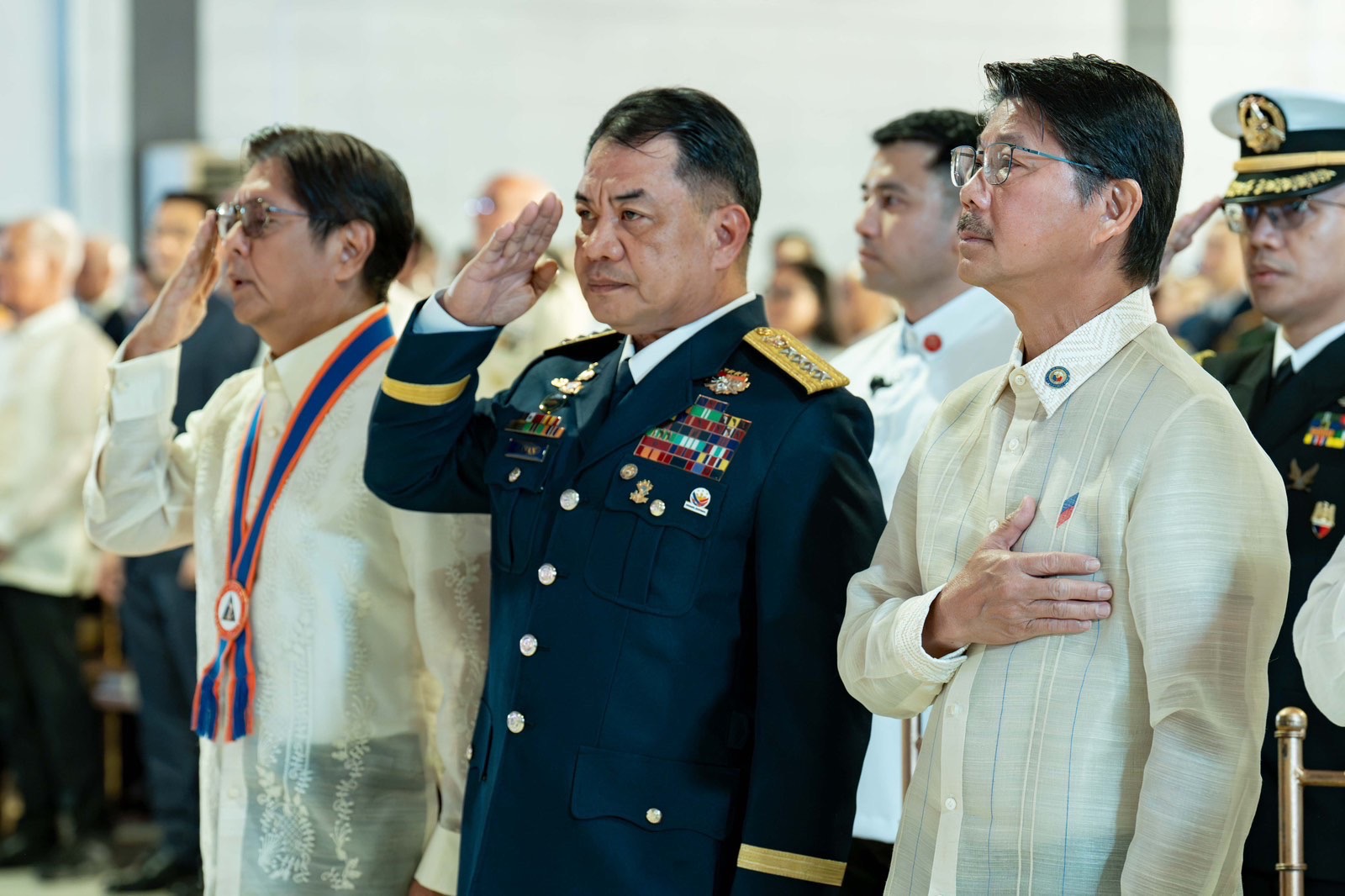
House Speaker Faustino “Bojie” G. Dy III on Friday joined President Ferdinand “Bongbong” R. Marcos Jr. in celebrating the Philippine Coast Guard’s (PCG) 125th founding anniversary, as the President reaffirmed his administration’s commitment to strengthening the agency’s capabilities amid growing maritime challenges.
The Speaker attended the anniversary celebration at the Eva Macapagal Super Terminal in Manila’s South Harbor alongside Department of Transportation Acting Secretary Giovanni Lopez, Interior and Local Government Secretary Jonvic Remulla, and PCG Commandant Admiral Ronnie Gil Gavan.
The celebration, with the theme “One Sea, One Mission, One Legacy: 125 Years of Guarding the Nation’s Maritime Future,” included the presentation of anniversary awards and a keynote address by President Marcos.
“As we mark 125 years of the Philippine Coast Guard, let us look to the horizon with confidence and a renewed commitment to strengthening its capabilities and readiness to respond to increasingly complex maritime challenges,” said President Marcos.
The President stressed that maritime security efforts must protect the lives and livelihoods of Filipinos, particularly fishermen and coastal communities, while safeguarding the country’s national interests.
“The waters that connect our islands must be a source of opportunity for our people, not a source of fear or uncertainty,” he said.
The Speaker’s attendance came following the House of Representatives’ passage of House Bill No. 11562, or the proposed Revised Philippine Coast Guard Law, which seeks to strengthen the agency through organizational reforms, improved operational capabilities, and better benefits for its personnel and their families.
Passed on third reading on October 6, the measure seeks to address the growing demands on the PCG as it responds to maritime accidents, illegal activities at sea, environmental emergencies, and threats to the country’s maritime security. It also aims to address organizational and personnel requirements that affect the agency’s ability to carry out its expanding responsibilities.
The need to strengthen the PCG was reflected in the operational accomplishments cited by President Marcos, who reported that the agency conducted more than one million pre-departure vessel inspections nationwide over the past year, rescued or pre-evacuated almost 95,000 individuals, and assisted nearly 138,800 people during disasters and emergencies.
Under Section 4 of the House-approved measure, the PCG is specifically mandated to “render aid to persons and vessels in distress and conduct search and rescue during maritime accidents,” while also enforcing vessel safety standards, maintaining navigational facilities, and protecting the marine environment. These provisions are intended to help protect passengers, fishermen, coastal communities, and other Filipinos whose lives and livelihoods depend on safe and secure waters.
The bill also strengthens the PCG’s ability to respond to maritime pollution, including oil spills, and assist in enforcing laws against illegal fishing, human trafficking, smuggling, and other crimes at sea. Section 57 further provides for the development of facilities and equipment, including “rescue and hospital ship, maritime monitoring surveillance and communications system, port facilities, air assets, and air stations,” to improve the agency’s operational reach and emergency response capabilities.
Beyond equipment and organizational reforms, the measure seeks to improve the benefits of Coast Guard personnel. Section 27 states that uniformed PCG personnel “shall receive the same base pay, hazard pay, and other benefits and allowances” authorized for corresponding ranks in the Armed Forces of the Philippines. The bill also provides for medical assistance, disability pensions, retirement benefits, and financial support for qualified surviving family members.
One significant provision is Section 39, which grants children of Coast Guard personnel who die in the line of duty “full coverage of their educational expenses,” including allowances for living expenses, transportation, and books, until they complete a degree program, subject to several conditions prescribed in the bill. The measure also provides monthly benefits for qualified survivors and additional protection for personnel who suffer permanent disabilities in the line of duty.
The proposed law also establishes a Philippine Coast Guard Academy to improve the training and professional development of future officers, strengthens the agency’s internal accountability mechanisms, and provides for a reserve force that may augment Coast Guard operations during national emergencies and disasters.