
Yamsuan urges passage of national land use act to help solve flooding woes
Advertisers
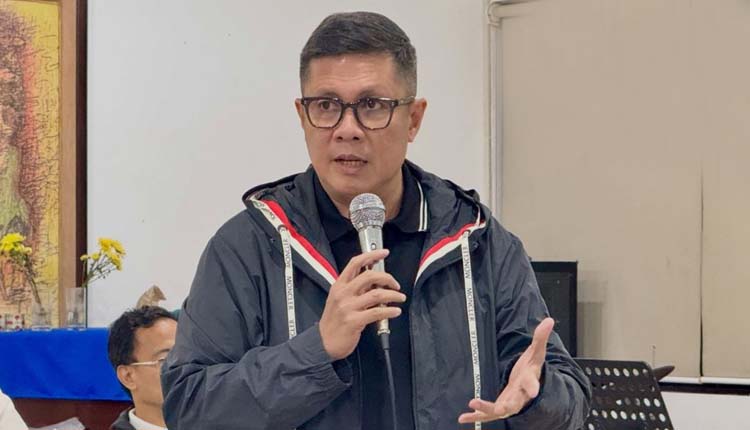
Parañaque 2nd District Representative Brian Yamsuan has called for the swift passage of a long-pending measure that aims to institutionalize a national land use policy to help solve perennial flooding in low-lying communities.
Yamsuan said a unified framework on land use planning and governance is among the critical elements necessary to develop a science-based long-term masterplan to prevent destructive, recurring floods.
“Localized solutions won’t fix flooding in the long run because flooding is not merely a drainage problem. It is a land-use, infrastructure and environmental planning problem. A National Land Use Act is the critical, missing factor in providing lasting solutions to the recurring floods that our countrymen have long endured for decades,” Yamsuan said.
Yamsuan said enacting a national land use law would harmonize fragmented local development planning with the national framework, and prevent development in high-risk and protected areas, which often exacerbate flooding and put lives at risk.
“A National Land Use Act will give the government more teeth in enforcing land use regulations and guide us where we should build so we avoid putting homes, businesses and infrastructure in high-risk areas,” Yamsuan said.
“One localized project may solve flooding in one community but transfers the problem to another area. Kung may national land use policy tayo, magkakaroon ng kaayusan at malawakang pagpaplano para matulungang maresolba ang problema natin sa pagbaha (If we have a national land use policy in place, there will be order and comprehensive planning to help solve the flooding problem),” he added.
The proposed National Land Use Act (NLUA), which is among the priority bills of the Marcos administration, was approved on third and final reading by the House of Representatives on May 5, 2026. Its counterpart version in the Senate remains pending.
Among the key provisions of the House version is the integration of climate and disaster risk planning by requiring the use of hazard maps, geospatial data and environmental assessments in deciding how land should be used, especially in flood plains, critical watersheds, coastal zones and other hazard-prone areas.
Initiatives such as Project NOAH (Nationwide Operational Assessment of Hazards) will play a key role in providing information on this aspect of land use zoning and planning, Yamsuan said.
Yamsuan also proposed a three-pronged comprehensive study focusing on the behavioral, environmental and historical (BEH) background of communities prone to flooding.
“Ang kailangan natin ay BEH. B or Behavioral background to study population growth, settlement patterns and waste disposal patterns. E for Environmental will show us where water comes from, where it collects, what blocks or takes it long to flow. H, which is the historical aspect, is to find out the community’s original state,” Yamsuan explained.
For instance, his home city of Parañaque has historically been an asinan or salt farm with naturally low-lying areas and soil conditions different from other parts of Metro Manila, he said.
Yamsuan also called on the government to look into best practices in other countries which could be applied to the Philippine setting.
He cited the example of Denmark, where urban planners and architects turned the low-lying coastal city of Copenhagen into a “sponge city” by using nature-based solutions such as permeable pavements, to increase its ability to absorb rainwater and capture it for future reuse.
A similar project is being worked out by the Metro Manila Development Authority (MMDA) with the Asian Infrastructure Investment Bank (AIIB), and is currently at the scoping phase to identify sites where the “sponge city” model can be implemented.
“We should identify areas where working with water instead of against it, offers the best solutions to the flooding problem,” Yamsuan said.
Yamsuan said he is supporting a measure—House Bill 10028–which aims to mandate the integration of sponge city principles and green infrastructure into national urban planning and development. The bill was filed by Yamsuan’s fellow National Unity Party (NUP) member Rep. Philip Conrad Acop of Antipolo City.###