Yamsuan proposes long-term measure to solve textbook woes, future-proof learning materials for public school students
Advertisers
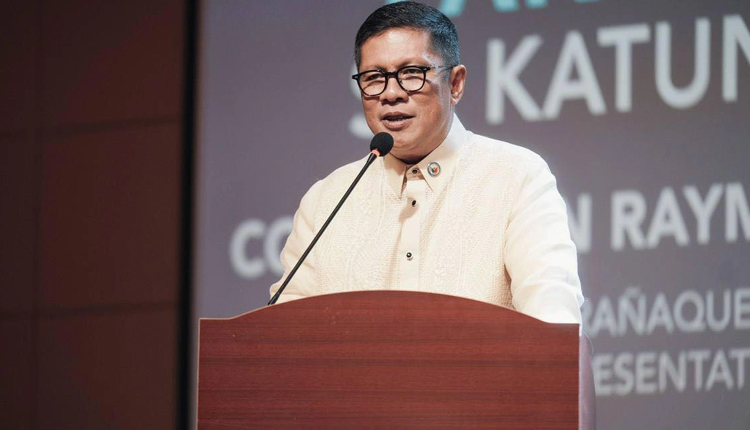
Parañaque 2nd District Representative Brian Yamsuan has urged Congress to pass his proposed measure that aims to develop a long-term plan to resolve the textbook shortage in public schools and future-proof learning materials for students.
Under his proposal outlined in House Bill (HB) 7868, the National Book Development Board (NBDB) will be given a broader role in the preparation and production of public school textbooks by mandating the Department of Education (DepEd) to team up with it in jointly formulating a National Textbook and Learning Resources Plan.
This Textbook Plan includes establishing policies, guidelines, and measures to ensure the availability of textbooks in all public schools as well as the review every five years of these learning materials to make them responsive to the needs of learners, Yamsuan said.
Yamsuan pointed out that while the DepEd has made commendable strides in bridging the textbooks-to-learner gap in public schools by allocating P19.5 billion for the production of textbooks this year and conducting early procurement activities, such initiatives need to be institutionalized under a comprehensive plan to ensure that learning materials in public schools meet industry standards and can readily address the educational needs of students.
“Formulating a National Textbook and Learning Resources Plan will not only see to it that enough textbooks are available for our public school learners, it will also ensure that these and other learning materials are relevant and effective in educating future-ready Filipino learners,” Yamsuan said.
Yamsuan said investing in textbooks will help improve reading literacy among learners, as he cited the alarming results of a study by the Second Congressional Commission on Education (EDCOM II), which found that 87 percent of Grade 11 students are non-independent readers, or those who find it difficult in comprehending and explaining what they just read.
“Tulad nga nang sinabi ng Pangulong Bongbong Marcos sa kanyang SONA [State-of-the-Nation Address, ‘edukasyon pa rin ang pangunahing nagtataguyod ng kakayahan This is why with the opening of Congress’ Second Regular Session, we are hoping our measure could be taken up and swiftly acted upon as it will once and for all address the problem of the availability of textbooks in public schools, especially in areas outside Metro Manila and Luzon,” Yamsuan added.
(Like what President Bongbong Marcos said in his SONA, it is still education that is the primary factor in developing competence.)
According to a report by the Philippine Institute of Development Studies (PIDS) cited by the Second Congressional Commission on Education (EDCOM II), textbook production remains heavily concentrated in Luzon, with limited publishing capacity in the Visayas and Mindanao.
To address this lack of publishing access outside Luzon, HB 7868 mandates the printing of public elementary and secondary school textbooks at the regional or provincial level, whenever economically feasible.
HB 7868, which seeks to amend Republic Act 8047, also requires the DepEd to phase out its elementary and secondary textbook publication and distribution functions within a three-year period and support the phasing in of private sector publishers to assume these tasks.
The NBDB Governing Board is tasked with monitoring and conducting an annual evaluation of the progress of the shift of functions from the DepEd to the private sector.
To “future-proof” public school textbooks, the measure also redefines the meaning of the term “book” to include electronic publications, and mandates the NBDB Governing Board to incorporate innovative technologies, global trends and sustainable industry practices.
The bill also champions inclusive education, as it directs the establishment of consultative mechanisms among the DepEd, NBDB, and players in the book publishing industry to develop and provide learning materials for learners with disabilities.
HB 7868 also creates Textbook Review Committees which are primarily tasked to evaluate and select textbooks and teachers’ manuals for use in public schools. These review committees shall be establish.